MEDITATIVE ART
Meditative Art is a free and independent exploration that examines the connections between art and contemplation, highlighting their parallels and helping us grasp the original and communicative nature of these two disciplines as aspects of the same timeless philosophy.
The artist Giovanna Rigattieri, creator of the project, bases her research on Contemplative Studies, an interdisciplinary academic field that explores the effects and potential of contemplative practices for a wide range of applications within society. Her studies have led to the development of a method that combines meditation and the creative process, using art as a tool for the evolution of consciousness.
Meditative Art stems from the desire to promote the private, non-speculative use of art, based on the conviction that art is a useful means for the renewal of the human condition. Through the creative process, one actively experiences a state of pure and free consciousness, unbound by prejudices or conventions that limit the exercise of critical thinking.
The development and spread of Meditative Art are intended to enhance individuals’ awareness and inner well-being, thereby fostering greater social cohesion and a state of peace.
“All true art seeks the spiritual.”
Rudolf Steiner, The Universal Mission of Art
The Method
Meditative Art bases its research on the exploration of the value of direct experience as the essential starting point for all knowledge, and it does so through a non-dual philosophical framework. From a non-dual perspective, nature itself is transcendence that reveals itself through experience.
By alternating artistic practice with traditional Eastern breathing exercises, one experiences profound states of being that penetrate to a place where there is no thought, nor its structures, and nonverbal description is the only way to convey the experience of the gentle flow of existence.
By relying on the natural human engagement with aesthetic value, we gain access to a private channel of dialogue with the subtle forces that flow through us. A sensitive awakening, within the sensible. A perspective free of intermediaries that must be cultivated—a method that, by renewing the stillness of the mind’s silence, allows us to attend to the emotional state that flows through us and to cultivate an attitude liberated from the experiences and social contexts in which we find ourselves living.
The meditations used come from both the practice of Yoga and the Thai Buddhist tradition. Specifically, the latter are called, respectively, Samatha (calm) , and Vipassanā (insight). The proposed meditation practices lead to a calm and stable mind, capable of exploring both within and around oneself.
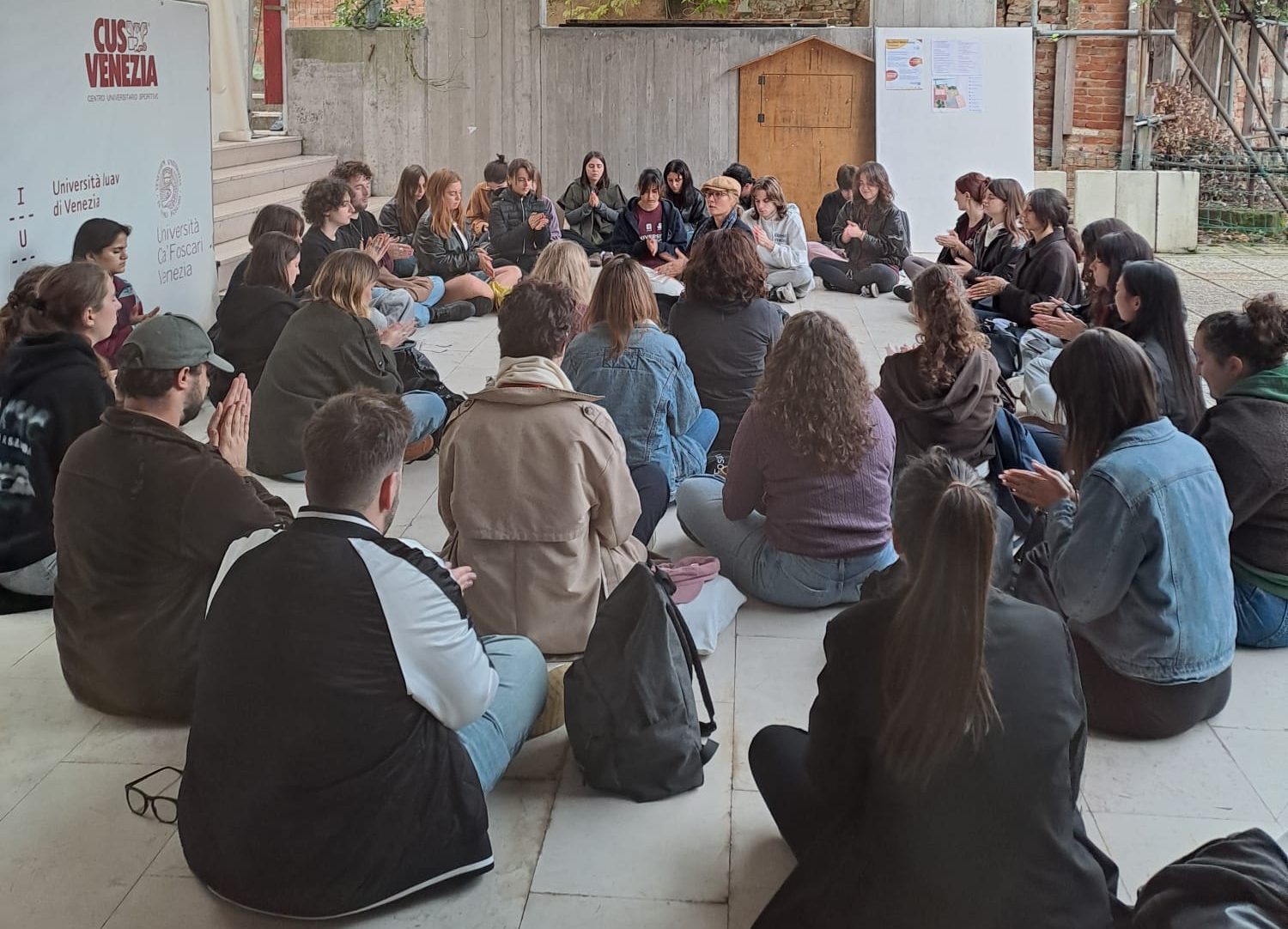
The qualities of art and meditation enhance each other’s effects: meditation improves focus, detachment, and the ability to observe, while the transformative power of art allows us to process the insights that emerge during contemplation, leading to a more alert and less passive view of our surroundings.
By unifying artistic practice and meditative practice, one experiences the possibility of communication between different aspects, paths, and approaches within the various realms of existence, breaking down habitual boundaries and rigid logic to arrive at one’s own method—an individual practice for defining the world.

“…my heart is alert, and these eyes close only to look within…”
George G. Byron, Manfred, Act I, Scene I
The Course
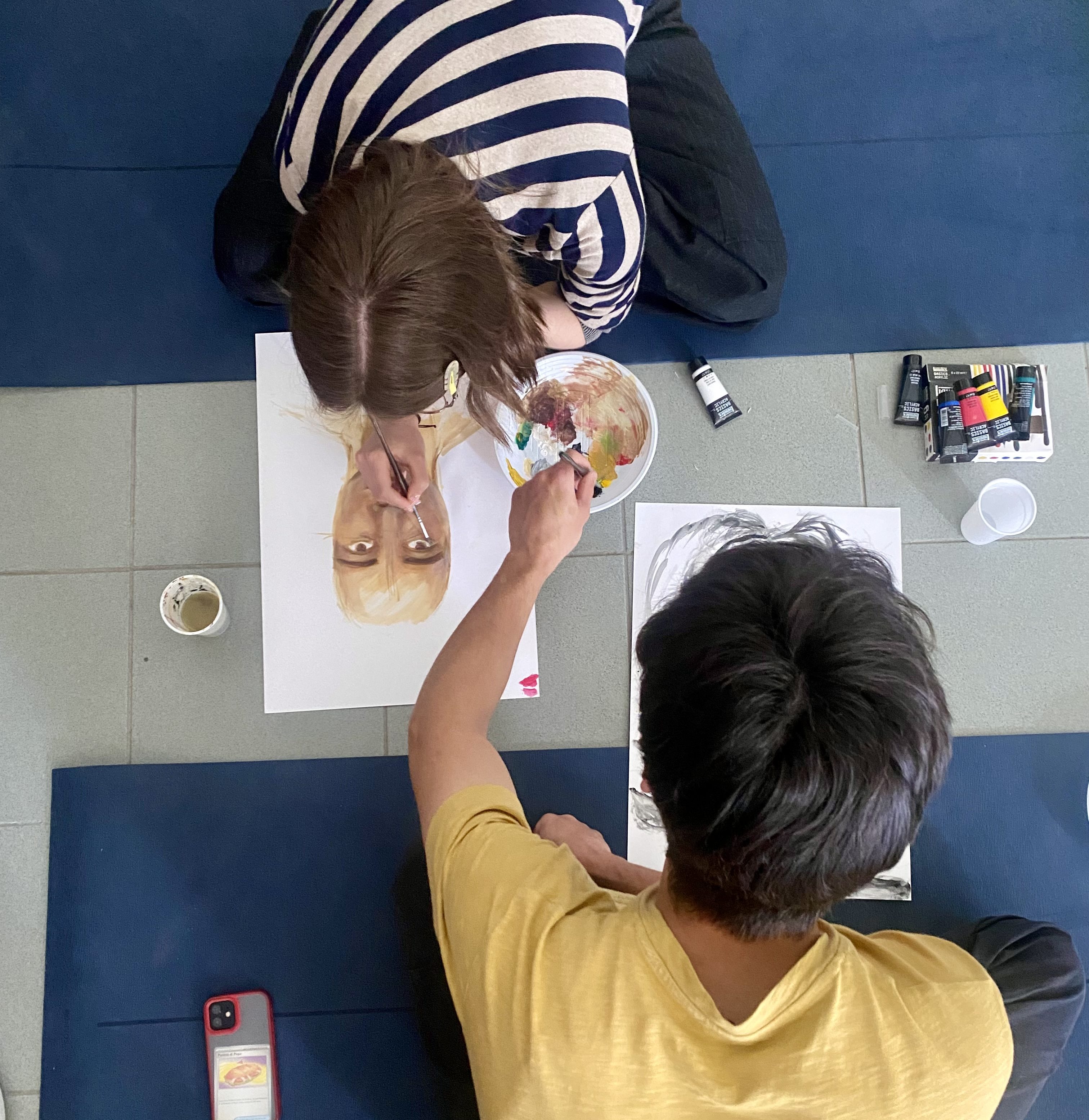
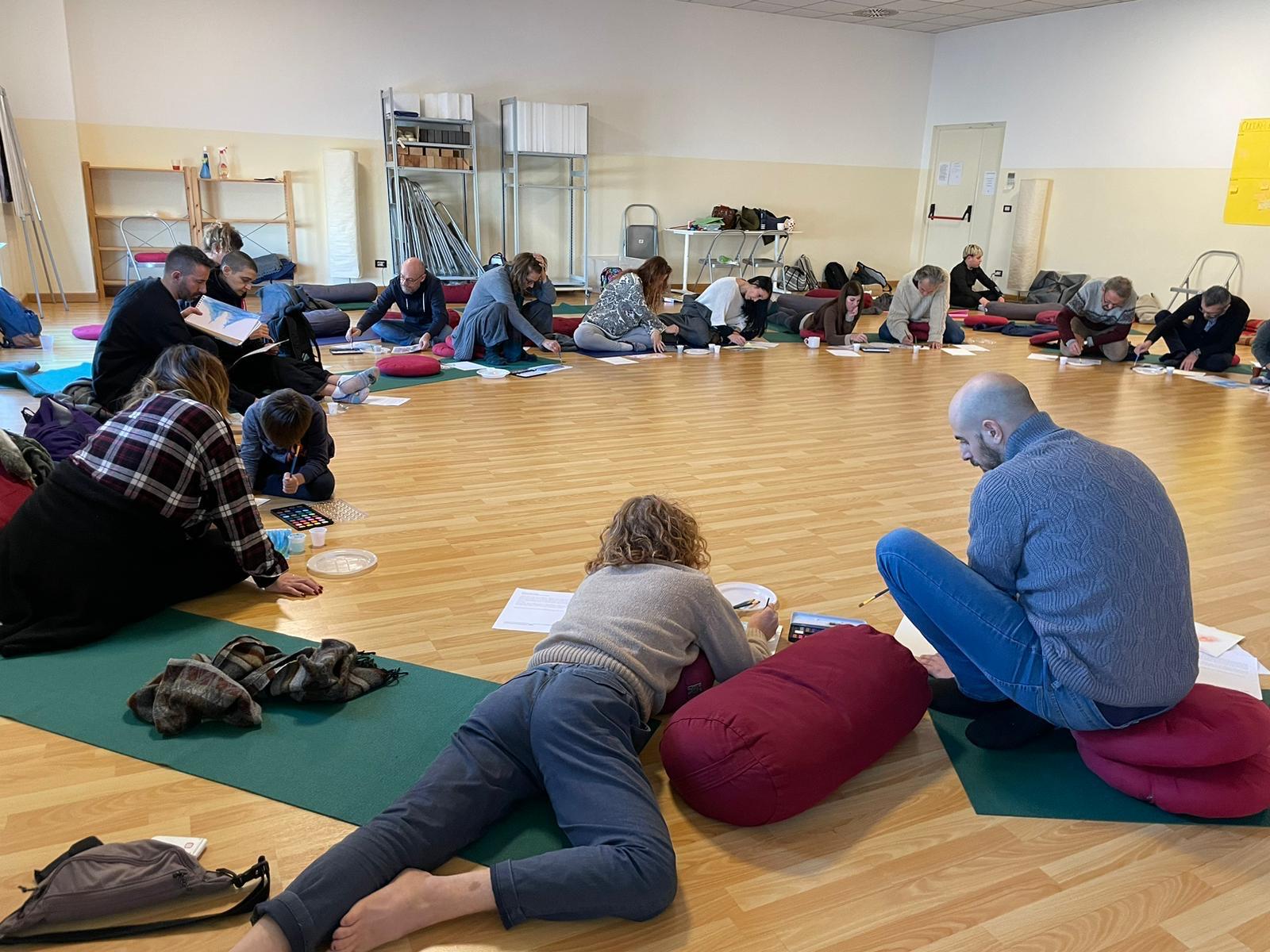
Meditative Art is a workshop structured around numerous practical painting exercises interspersed with seated and lying-down meditations, designed to promote emotional balance and the ability to cultivate a positive relationship with the environment, leading to a greater understanding of the value of our existence in the world.
The lessons cover various areas of artistic expression and include: analysis of works of art, video interviews with artists, listening to music, poetry, drawing and painting exercises, and more. By breaking down the barriers between formal languages, the intentional narrative—which moves freely and without constraint within the artistic act—emerges, revealing its ethical value. The ideas—the essences that permeate works of art—are available to everyone, much like a vehicle for contemplation that offers itself to those who know how to grasp it.
The pedagogical approach is structured horizontally, drawing inspiration from Socratic maieutics and critical pedagogy.
“They arrived at this knowledge through a comprehensive process of reflection and action, and this knowledge is not static; it cannot be transformed into something that can be imparted to others.”
Paul Freire, *Pedagogy of the Oppressed*
The instructor guides the student with deep sensitivity, encouraging them to follow their own intuition without conforming to or trying to meet imaginary expectations.
Meditative practices allow us to embrace the flow of thoughts with flexibility, helping us overcome any stressful situations related to daily life, while artistic practice enables us to process invisible archetypes and personal abstractions, transforming them into tangible forms and revealing the value of their presence
Intended Audience
This is a course for adults, designed for anyone interested in discovering traditional breathing techniques and deep mindfulness through artistic expression; however, it does not require any specific skills. In fact, participants are not required to take any assessment tests either at the beginning or at the end of the course. It is a personal, non-standardized learning process.
Course Objectives
- To foster the development of an independent, expressive language
- Increasing Empathy
- Foster a greater appreciation for aesthetics
- Hone analytical and observational skills
- Supporting Resilience and Inclusion Initiatives